Before many Muslims ever stand in Makkah, before they ever walk into Masjid al-Haram or lift their eyes towards the Kaaba for the first time, they already know exactly where it is.
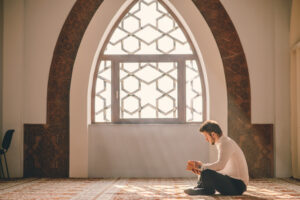
They have been turning towards it for years as children learning to pray, in quiet bedrooms before sunrise, in crowded mosques in Cairo, in hospital rooms far from home, and in quiet corners at work when it is the only private place they can find.
In moments of peace and in moments when Salah is the only thing holding everything together. Five times a day, wherever we happen to be, we turn towards the same place.
At the centre of that direction stands the Kaaba.
Simple in appearance, yet carrying centuries of worship, sacrifice, dua, and devotion. For Muslims, it is more than a landmark in Makkah. It is a reminder that no matter how scattered we may be across the world, Allah has given us a centre to return to.
What Is the Kaaba?
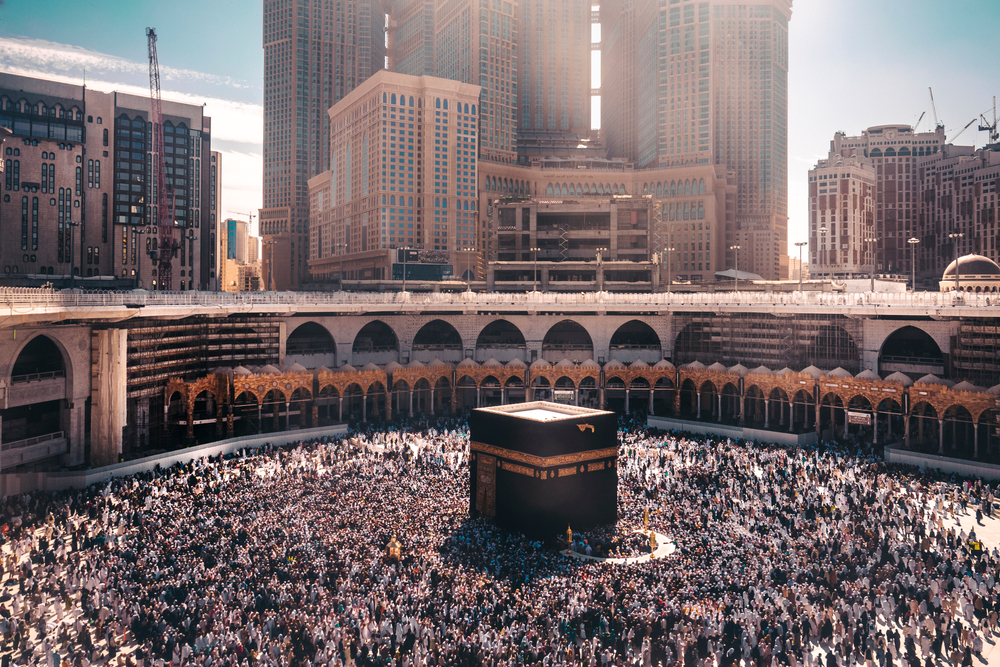
The Kaaba is the sacred, cube-shaped structure at the heart of Masjid al-Haram in Makkah, Saudi Arabia. It is also known as Bayt Allah, the House of Allah.
The Kaaba is our Qibla, the direction Muslims face during prayer.
And there is something deeply beautiful about that. Islam could have left every person to face whichever direction they wished. Instead, Allah gave the Ummah one direction.
So, when Salah begins, millions of people across different countries, cultures, languages, and circumstances quietly turn towards the same point.
For a few moments, the world feels a little less divided.
The Qur’an tells us that they raised the foundations of the Sacred House together.
Imagine the scene. A father and son in the valley of Makkah, no crowds surrounding them, no grand mosque stretching around the Kaaba, no millions of pilgrims arriving from every corner of the earth. Just two servants of Allah building something because He asked them to.
And as they worked, they made dua:
“Our Lord, accept this from us. You are indeed the All-Hearing, All-Knowing.” — Qur’an 2:127
Perhaps that is one of the most beautiful parts of the story. They were doing something extraordinary, yet their concern was still: Ya Allah, accept it from us.
It is a reminder that in Islam, even our greatest acts are never about being seen. They are about to be accepted.
Stone by stone, Ibrahim (AS) and Ismail (AS) raised a house whose call would eventually reach generations they would never meet.
And Muslims are still answering that call today.
Why Do Muslims Face the Kaaba When They Pray?
Muslims face the Kaaba because Allah made it our shared direction of prayer. But there is a deeper beauty in what that creates.
Think about the Ummah at any given moment: someone is praying in a tiny apartment in Sydney, while someone else stands beneath an open sky in Africa. A shopkeeper may have stepped away from work, a mother may be praying quietly while her children sleep, and a traveller may be searching for the Qibla in a place they have never been before.
Different lives. Different languages. Different worries carried into prayer.
But when they say Allahu Akbar, they turn towards the same Kaaba. The Kaaba does not make our worship one because we worship it. It reminds us that the One we worship is One.
And for a few minutes, every difference that normally separates people becomes much smaller.
The Kaaba You Face, Before You Ever See
For many Muslims, the first time they see the Kaaba is difficult to describe because how do you explain finally standing in front of a place you have faced in prayer your entire life?
For years, it existed as a direction. Then suddenly, it was there.
The same Kaaba you faced during Fajr before school, the same direction you turned towards when you were heartbroken the same Qibla you searched for while traveling.
The same place millions of Muslims have faced before you.
For pilgrims performing Hajj or Umrah, the first sight of the Kaaba can bring tears before a single word is spoken. Perhaps because it feels unfamiliar and familiar at the same time.
You have never stood there before, yet somehow, you already know it.
Walking Around the Kaaba
During Hajj and Umrah, Muslims perform Tawaf, circling the Kaaba seven times in worship of Allah.
From above, the sight is remarkable. Thousands of people move together around one center.
Some are young, some are elderly, some traveled comfortably, others saved for decades to stand there, some understand each other’s languages, most do not.
Yet they move together.
Nobody receives special treatment because they are wealthier, more important, or from somewhere else. Everyone arrives as servants of Allah, and perhaps that is one of the quiet lessons of Hajj:
So much of what the world teaches us to value becomes very small in front of Allah.
What Is the Black Stone?
Set into one corner of the Kaaba is Al-Hajar Al-Aswad, the Black Stone.
It has a special place within the rituals of Tawaf, and pilgrims may touch it or gesture towards it, following the practice of Prophet Muhammad ﷺ. But just like the Kaaba itself, the Black Stone is not worshipped.
Islam is always clear about where worship belongs. Not to a stone. Not to a building. Not to a person.
Only to Allah.
The sacred places and symbols of Islam matter because they point us back to Him.
The Kaaba and the Story of Ibrahim (AS)
The Kaaba cannot really be separated from the story of Ibrahim (AS). His life repeatedly teaches the same lesson in different forms:
Trust Allah.
When the path is clear, trust Him. When the path does not make sense yet, trust Him. When obedience requires sacrifice, trust Him.
That same legacy appears in the Kaaba. It appears throughout Hajj.
And it appears again in Qurban during Eid al-Adha, when Muslims remember Ibrahim’s willingness to give up what he loved for the sake of Allah.
These are not disconnected stories. They are pieces of the same legacy. A legacy of surrendering to Allah and discovering that what He gives back is greater than what we thought we were losing.
Why Is the Kaaba So Important in Islam?
The Kaaba sits at the center of so many parts of Muslim life. We face it in Salah. We circle it during Tawaf.
Its story carries the legacy of Ibrahim (AS) and Ismail (AS). Pilgrims dream of reaching it for Hajj and Umrah, and millions of Muslims who may never meet one another remain connected to it every single day.
But perhaps the Kaaba’s greatest beauty is not only what happens around it. It is also what it reminds us of.
That Islam gives us somewhere to return when life feels scattered, that worship can unite people whom the world insists on dividing. That a simple act performed sincerely for Allah can outlive us by generations, and that no matter how far from Makkah we may be, we are never too far from Allah.
One Direction, One Ummah
The Kaaba itself is simple: stone walls, a black Kiswah, a sacred house in the middle of Makkah.
Yet around that simplicity sits something enormous. Centuries of dua. Millions of prayers. Generations of pilgrims.
The footsteps of people who arrived carrying sins, hopes, grief, gratitude, and dreams. Some stood before the Kaaba asking Allah for forgiveness, some asked for children, some asked for healing, and some came simply to say thank you.
And every day, Muslims who are thousands of kilometers away still turn towards that same place. Maybe that is part of why the Kaaba touches the heart so deeply.
Islam does not tell us that we must be in Makkah to be close to Allah; instead, five times a day, it allows Makkah to enter our lives wherever we are.
We face the Kaaba.
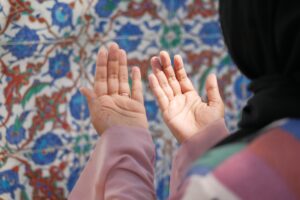
We raise our hands.
We call, “Allahu Akbar.”
And for those few moments, everything else falls behind us. Different countries, different languages, different lives.