What is Hajj? A Complete Beginner’s Guide
Every year, millions of Muslims make their way towards the same place.
They come from different countries, speak different languages, and carry different stories. Yet, though they arrive in Makkah, they share one intention: to worship Allah (SWT).
This journey is Hajj. It is the sacred pilgrimage to Makkah and one of the five Pillars of Islam.
For Muslims who are able, Hajj is an obligation to be fulfilled once in a lifetime. But beyond that obligation lies something deeply personal: a journey of faith, patience, sacrifice and unity, woven into a story that began thousands of years ago.
What Is Hajj In Islam?
Hajj is the annual Islamic pilgrimage to Makkah, Saudi Arabia.
It is the fifth pillar of Islam, alongside the Shahadah, Salah, Zakat, and fasting during Ramadan, and it takes place during specific days of Dhul Hijja, the final month of the Islamic calendar.
For the pilgrim, hajj begins long before they reach Makkah.
It begins with intention.
With the decision to leave behind what is familiar and travel towards a place Muslims around the world face in prayer every single day.
And once that journey begins, every step leads back to a story of faith.
Where Does The Story Of Hajj Begin?
The story of Hajj is closely tied to the Prophet Ibrahim and his family.
Many of the rites’ pilgrims who perform today carry memories of their trust in Allah, their sacrifices and their unwavering obedience.
Pilgrims walk between Safa and Marwa, remembering Hajar as she searched desperately for water for her son Ismail (AS).
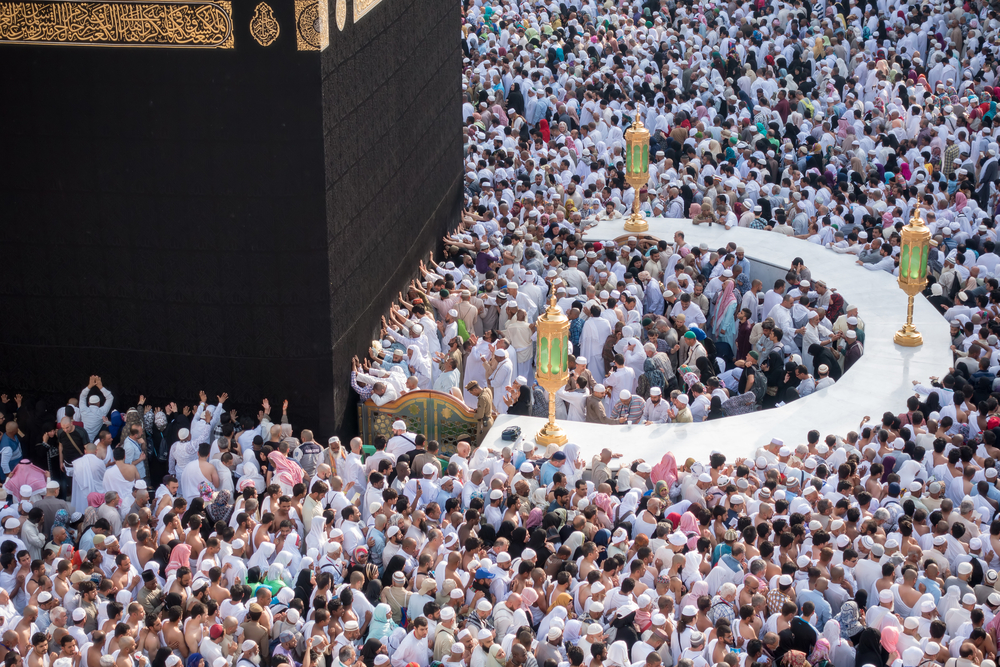
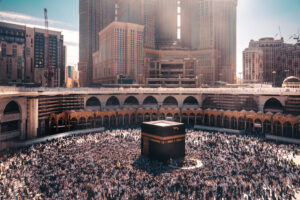
They gather around the Kaaba, whose foundations Ibrahim (AS) and Ismail (AS) laid.
During these sacred days, Muslims remember Ibrahim’s (AS) devotion through Qurban.
So, the pilgrim isn’t simply moving from one place to another.
With every step, they walk through a story carried across generations.
Who Must Perform Hajj?
For many Muslims, Hajj is something they dream about long before they ever see the Kaaba.
Some save for years. Some wait decades. Some spend a lifetime making dua for the opportunity.
Hajj is required once in a lifetime for adult Muslims who are physically and financially able to make the journey.
Islam does not place this obligation on someone who genuinely does not have the means or physical ability to undertake it.
For those who can go, arriving in Makkah can feel like the answer to a prayer made many years ago.
When Does Hajj Take Place?
Hajj takes place during Dhul Hijja, The twelfth and final month of the Islamic calendar.
The main rites begin on 8 Dhul Hajjah and continue through the days that follow, usually until 12 or 13 Dhul Hijja.
Because the Islamic calendar follows the lunar cycle, Hajj dates in the Gregorian calendar change each year.
These days include some of Islam’s most sacred moments, including the Day of Arafah and Eid al-Adha.
Why Is Hajj So Important?
A pilgrim may arrive in Makkah beside people they have never met, from places they may never visit and speak languages they may never understand.
Yet they stand shoulder to shoulder. They face the same Kaaba. They perform the same rites. They call upon the same Allah. That is part of Hajj’s beauty.
It reminds us that before status, nationality, wealth or background, we are one ummah.
Hajj is a journey of submission, patience, equality, sacrifice, forgiveness, and unity.
It is deeply personal yet never experienced alone.