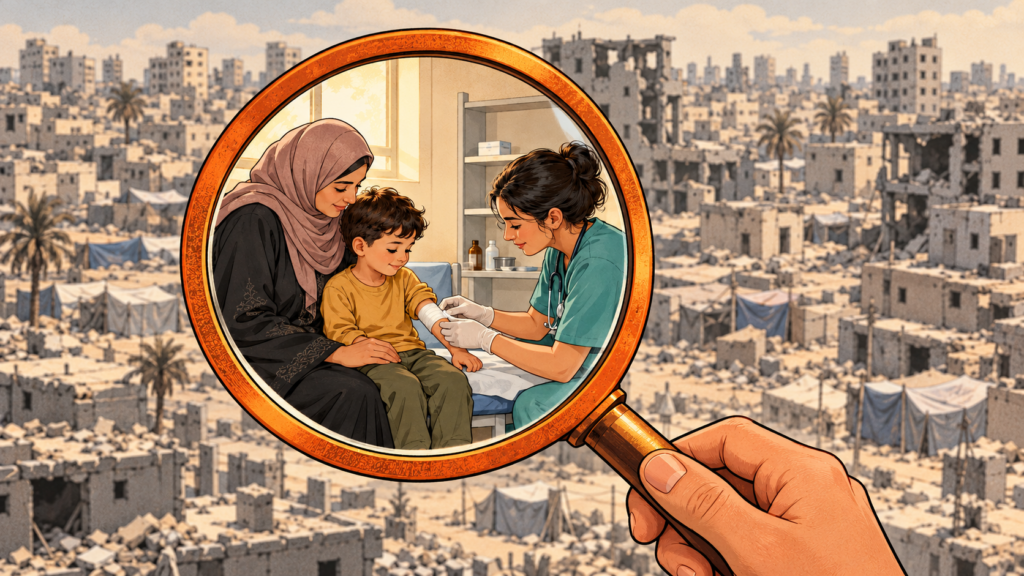
There is the moment an injury happens, and then everything that comes after.
That second part is what we wanted people to look at this week.
When we talk about Gaza’s health crisis, the conversation often starts with hospitals, casualties and emergency treatment. All of that matters, but it is only one part of the picture. A person can survive an injury and still need months of care. Someone who loses a limb may need a wheelchair before they can even begin rehabilitation. A cancer patient still needs treatment. A child who has lived through displacement, fear and loss may need support long after their physical wounds have healed.
That is the thinking behind Look Again: The Hidden Struggles.
We wanted to look beyond the first emergency and ask a simpler question: what happens next?
The Part of Healthcare We Do Not Always See
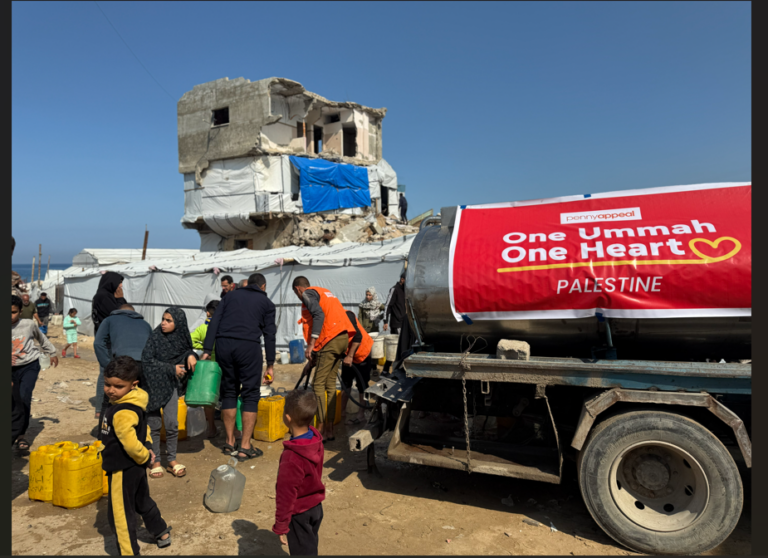
We know that only 19 of Gaza’s 36 hospitals are partially functioning, with none fully operational. Medicines, diagnostics, equipment, fuel, and specialist services remain limited, making healthcare harder at almost every stage.
Picture someone who needs dialysis several times a week. Or a mother who still needs maternity care. Or a patient whose cancer treatment cannot simply be put on hold because the health system is under pressure.
Then there are the people living with injuries that will change the way they live.
Around 43,000 people in Gaza are living with potentially life-changing injuries, tens of thousands need long-term rehabilitation, and more than 5,000 amputations have been recorded.
Those numbers tell us the scale, but they do not tell us what recovery looks like day to day.
This week, we shared Khalil’s story.
Khalil is 24 and a father of two young girls. While out and about, he was suddenly hit by an airstrike. Khalil woke up in hospital having lost a leg, with serious injuries to his arm and back.
He survived, but that was not the end of his medical journey.
The wheelchair he later relied on was already damaged, and severe nerve damage in his arm made pushing himself around even harder. For Khalil, something as simple as moving through the day became part of his recovery.
That is where healthcare starts to look different.
Sometimes it is a hospital bed, surgery or medicine. Sometimes it is a wheelchair that lets someone move around with dignity and rely a little less on the people around them.
Looking Again at Recovery
Mobility became a big part of what we focused on this week because it is one of those needs that can easily sit in the background.
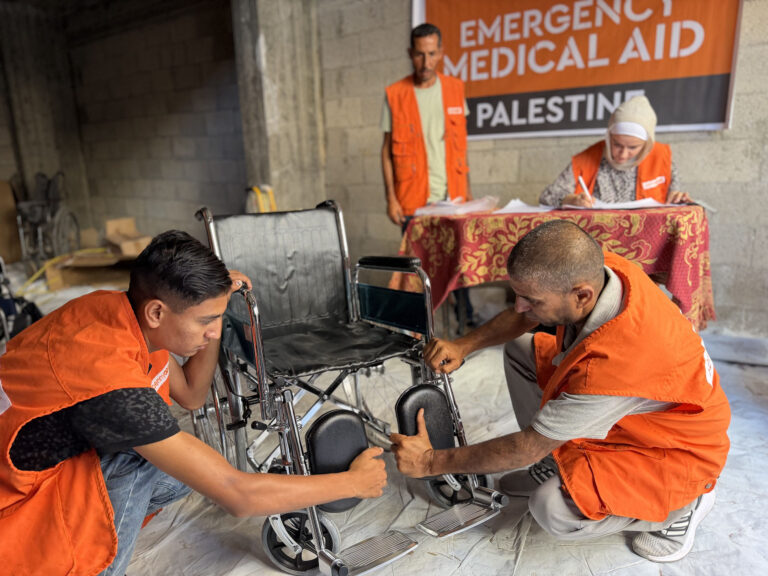
Penny Appeal has already supported the distribution of 182 wheelchairs inside Gaza, sourced locally through our partners. But with access to new equipment still difficult because of the blockade, the response can’t be only about bringing in more.
Sometimes the answer is already there.
Nearly 50 damaged wheelchairs have been collected for refurbishment, with local technicians working to repair the chairs that can still be used and redistribute them to people waiting for mobility support.
That is the idea behind renewal for Gaza.
Use what is available. Restore what can still work. Keep support moving.
And mobility is only one part of the bigger picture.
This week, we also looked at psychosocial support and the needs that are much harder to see.
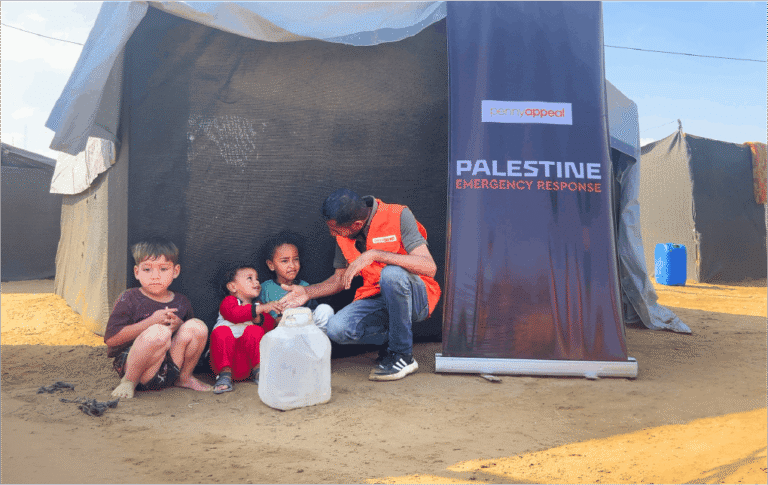
Children and families across Gaza have lived through repeated displacement, injury, fear and loss. Healthcare workers continue treating patients while living through the same crisis themselves. For many people, recovery will also mean having somewhere to process what has happened, rebuild a sense of safety and begin adjusting to life again.
Because health is not only about treating the wound in front of you. It is about what that person needs next.
And that is really what this past week has been about.
Looking at Gaza’s health crisis as a whole. Not as one problem with one solution, but as a chain of care where every part connects to the next.
A hospital needs supplies to keep treating people. A person who survives an amputation may need rehabilitation and mobility support. A wheelchair needs to be maintained. A child carrying trauma may need psychosocial care. And all of it depends on a health system that can keep going.
That is the focus of Renewal for Gaza.
To support the parts of healthcare that continue after the immediate emergency, and to stay with people through the part of the story that is usually much quieter.
The treatment. The recovery. The rebuilding.
Support the Renewal for Gaza Health Appeal.