Zakat is one of the five pillars of Islam and an obligation for Muslims who meet the required conditions.`
But knowing exactly what you owe can sometimes feel complicated. What is the Nisab? Does your gold count? What about shares, savings or business assets? And who can receive your Zakat?
Our Zakat Guide takes you through the essentials, step by step, so you can understand your obligation and calculate what you owe.
An obligation that purifies our wealth
Zakat is an obligatory form of charity and one of the five pillars of Islam. The word Zakat carries the meanings of purification and growth.
For Muslims who meet the conditions, a portion of eligible wealth is given each year to those Allah (SWT) has made eligible to receive it.
Zakat reminds us that our wealth is a blessing and a trust from Allah (SWT). Through it, wealth reaches people experiencing poverty, debt and hardship.
“Take from their wealth a charity by which you purify them and cause them increase…”
Surah At-Tawbah, 9:103
Zakat generally becomes obligatory when your Zakatable wealth reaches or exceeds the Nisab and the relevant conditions have been met.
Think you may need to pay Zakat? Our calculator can help you work it out.
The minimum threshold for paying Zakat
The Nisab is the minimum level of wealth at which Zakat becomes obligatory.
Traditionally, the Nisab is based on the value of either:
Gold: 87.48 grams
Silver: 612.36 grams
Because gold and silver prices change, the equivalent value in Australian dollars also changes.
If your total Zakatable wealth, after applicable liabilities, reaches the Nisab, you may be required to pay Zakat.
For most Zakatable wealth, the standard rate is 2.5%. A simple calculation looks like this:
Zakatable assets − applicable liabilities = Zakatable wealth
Then:
Zakatable wealth × 2.5% = Zakat due
Example
If your total eligible Zakatable wealth is $20,000 after applicable liabilities:
$20,000 × 2.5% = $500
Your Zakat would be $500.
The calculation can become more involved when you have gold, investments, business assets or other forms of wealth. Our Zakat Calculator brings these together in one place.
Zakat can apply to more than the money sitting in your everyday bank account.
Depending on your circumstances, your Zakat calculation may include:
Cash & Savings
Money held in bank accounts, savings accounts and cash you own can form part of your Zakatable wealth.
Gold & Silver
Gold and silver may be subject to Zakat when the relevant conditions are met. Scholarly opinions differ regarding certain forms of personal jewellery, so seek qualified advice if you are unsure.
Shares & Investments
Shares and other investments may be Zakatable. How Zakat is calculated can depend on the type of investment and your intention in holding it.
Business Assets
If you own a business, Zakat may apply to cash, trading stock, money owed to the business that is expected to be received and other Zakatable current assets.
Assets used to operate the business, such as machinery, equipment and premises, are generally treated differently from stock held for sale.
Money Owed to You
Money that others owe you may need to be considered as part of your Zakat calculation, depending on the likelihood of repayment and other circumstances.
Property
Your family home is generally not treated as a Zakatable asset simply because you own it.
Different rules can apply to property purchased for resale, investment or rental purposes. The treatment depends on why the property is held and the income or assets associated with it.
Other Investments
Other forms of wealth may also carry Zakat obligations. If you hold cryptocurrency, managed investments or more complex assets, seek appropriate scholarly guidance on how they should be treated.
What Can I Deduct from My Zakat Calculation?
Not every debt means you can simply subtract the entire outstanding balance from your Zakatable wealth.
Certain immediate or short-term liabilities that are currently due may be deductible when calculating Zakat.
For long-term debts, such as a mortgage or long-term financing arrangement, you generally would not deduct the entire remaining balance from your Zakatable assets.
The treatment of debt can differ between scholarly opinions, so if debt significantly affects whether you meet the Nisab, seek qualified Islamic advice.
Who Can Receive Zakat?
Allah (SWT) identified eight categories
Zakat cannot simply be given anywhere. The Qur’an identifies eight categories of people and purposes eligible to receive Zakat.
“Zakah expenditures are only for the poor and for the needy and for those employed to collect [Zakah] and for bringing hearts together and for freeing captives and for those in debt and for the cause of Allah and for the [stranded] traveller…” Surah At-Tawbah, 9:60
The eight categories are:
1. The Poor (al-fuqara)
People who do not have sufficient wealth to meet their basic needs.
2. The Needy (al-masakin)
People experiencing hardship who cannot adequately provide for themselves or their dependants.
3. Zakat Administrators (al- ‘amilina ‘alayha)
Those authorised to collect, administer and distribute Zakat.
4. Those Whose Hearts Are to Be Reconciled (al-mu’allafatu qulubuhum)
category recognised in the Qur’an, the application of which depends on scholarly interpretation and circumstance.
5. Those in Bondage (fi al-riqab)
Traditionally, Zakat could be used towards freeing people from bondage.
6. Those in Debt (al-gharimin)
People overwhelmed by legitimate debt who do not have the means to repay it.
7. In the Cause of Allah (fi sabilillah)
A Qur’anic category whose scope is discussed by scholars. It should not be used casually as a catch-all for any Islamic or charitable project.
8. The Stranded Traveller (ibn al-sabil)
A traveller who is cut off from their wealth or resources and requires assistance.
Where Can My Zakat Go?
Turn your obligation into practical support
Zakat can provide critical assistance to eligible people facing poverty and hardship.
Through Penny Appeal Australia, eligible Zakat may support approved programs assisting people with essential needs such as:
Food and nutrition
Helping families who cannot afford enough food.
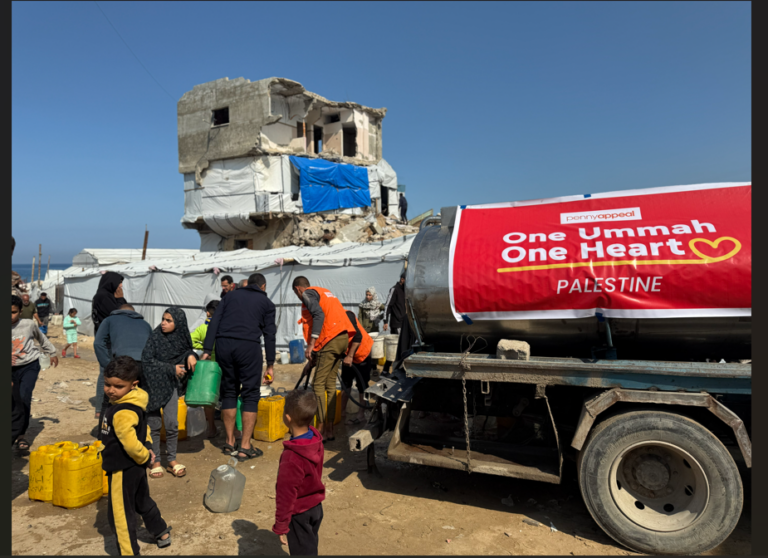
Clean water
Supporting eligible communities without reliable access to safe water.
Emergency assistance
Helping eligible families affected by displacement, disaster and humanitarian emergencies.
Orphan and family support
Supporting eligible children and families experiencing severe financial hardship.
Essential assistance
Helping people meet basic needs when poverty has left them without the means to do so. Your Zakat is distributed according to the requirements of Zakat and the eligibility of the programs and recipients.
Zakat or Sadaqah?
They are both forms of giving, but they are not the same.
Zakat
Obligatory for Muslims who meet its conditions.
Usually calculated at 2.5% on applicable Zakatable wealth.
Can only be distributed to eligible Zakat recipients.
Requires the intention of Zakat when given.
Sadaqah
Voluntary and can be given whenever you choose.
There is no fixed amount.
Can generally support a wider range of charitable causes.
Can be given throughout the year.
If you owe Zakat, giving Sadaqah does not replace your Zakat obligation.
What About Zakat al-Fitr?
Zakat al-Fitr is separate from Zakat al-Mal
Zakat al-Fitr, also known as Fitrana, is an obligatory charity connected to the end of Ramadan.
It is different from the annual Zakat you calculate on your wealth.
Zakat al-Fitr should be given before the Eid al-Fitr prayer so eligible people can benefit in time for Eid.
It is generally paid on behalf of yourself and eligible dependants under your care.
Can I Give Zakat to Family?
In some circumstances, yes.
Zakat may be given to eligible relatives such as siblings, aunts, uncles and other family members if they qualify to receive it.
However, you generally cannot give your Zakat to people you are already Islamically responsible for financially supporting, such as your parents, grandparents, children or grandchildren.
Specific family circumstances can vary, so seek scholarly guidance if you are unsure.
Can I Pay My Zakat Early?
Zakat may be paid before your usual Zakat due date according to recognised scholarly opinions, particularly where there is an urgent need.
If you choose to pay early, keep a clear record of what you have paid so you can correctly account for it when your normal Zakat date arrives.
Can I Pay Zakat in Instalments?
Your Zakat should be paid when it becomes due.
If you want to spread payments throughout the year, one approach is to pay Zakat in advance through regular instalments, then calculate your actual obligation on your Zakat date and adjust for any difference. This can make a larger annual obligation easier to manage while helping Zakat reach eligible people throughout the year.
What About Superannuation?
Australian superannuation raises specific questions because access to the funds is generally restricted until a condition of release is met.
Scholars differ on the Zakat treatment of retirement and superannuation funds depending on factors such as ownership, accessibility and how the funds are invested.
Because individual superannuation arrangements differ, we recommend seeking qualified Islamic advice before including or excluding your superannuation from your Zakat calculation.
When Should I Pay My Zakat?
Once you become liable for Zakat, it is useful to establish a Zakat anniversary, a date in the Islamic calendar when you review your Zakatable wealth each year.
Many Muslims choose Ramadan because it is easy to remember and a blessed time for giving, but Zakat is not limited to Ramadan.
If your Zakat becomes due at another point in the year, you should not delay it simply to wait for Ramadan.
Frequently Asked Questions
Do I pay Zakat on my home?
Your primary residence is generally not Zakatable simply because you own it. Different considerations can apply to property purchased for trade or investment.
Do I pay Zakat on my salary?
Zakat is not simply charged at 2.5% every time you receive your salary. Money you still own as part of your Zakatable wealth on your Zakat date may be included in your calculation.
Is my car Zakatable?
A personal vehicle used for everyday transport is generally not included as a Zakatable asset. Vehicles held as trading stock by a business are treated differently.
Do I pay Zakat on gold jewellery?
There are differences of scholarly opinion regarding Zakat on personal gold jewellery. If this applies to you, seek guidance according to the scholarly position you follow.
Can I give Zakat on behalf of someone else?
You can facilitate a Zakat payment for another person with their permission and intention. Zakat is an act of worship, so the appropriate intention is important.
Can I give more than the Zakat I owe?
Yes. Pay the Zakat you owe and anything additional can be given as voluntary Sadaqah.
Do I need to make an intention for Zakat?
Yes. Zakat is an act of worship, and you should have the intention that the payment you are making is your Zakat.
Bring together your savings, gold, investments, business assets and other Zakatable wealth with our online calculator.